A federal appeals court has disqualified President Donald Trump’s former personal attorney, Alina Habba, from serving as federal prosecutor for New Jersey.
The U.S. Court of Appeals for the Third Circuit upheld a district court decision that found his appointment violated the Federal Vacancy Reform Act.
Trump nominated Habba for the federal prosecutor position, but she was not confirmed by the Senate. When the district court judges refused to appoint her to the position, the administration installed her by formally withdrawing her nomination and then placing her in a role that would allow her to fill the position, in which a US district judge called it “a novel series of legal and personnel measures.”

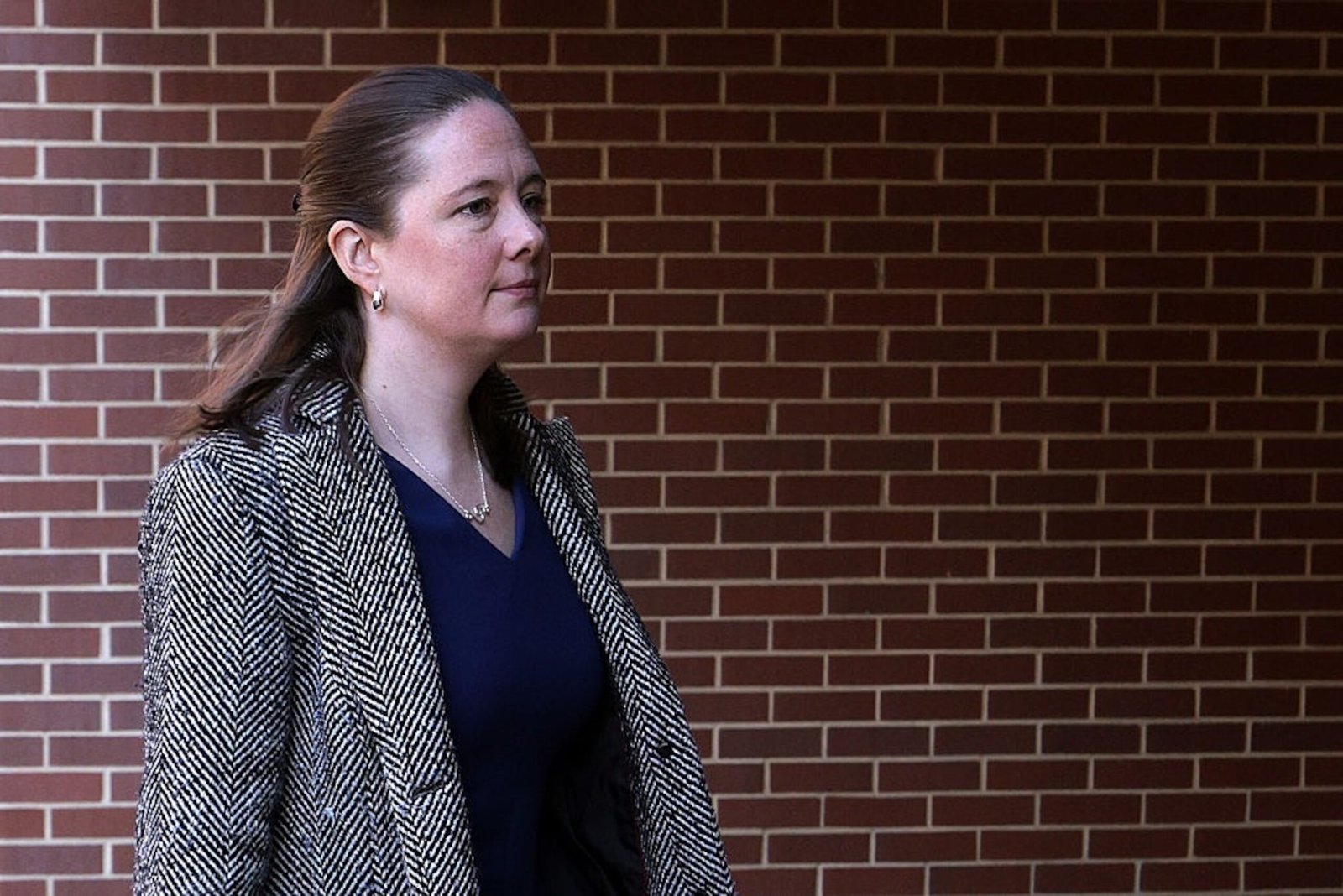
Alina Habba, President Donald Trump’s pick to be acting U.S. attorney for New Jersey, speaks to reporters outside the White House, March 26, 2025, in Washington.
Mark Schiefelbein/AP, Archives
The appeals court ruled that the maneuver was improper.
“Habba is not the Acting United States Attorney for the District of New Jersey by virtue of her appointment as First Assistant United States Attorney because only the first assistant in place at the time the vacancy arises automatically assumes the functions and duties of the office under the FVRA,” the court wrote, referring to the Federal Vacancy Reform Act.
“Furthermore, because Habba was nominated for the vacant U.S. attorney position, the FVRA’s nomination ban precludes her from assuming the role of acting U.S. attorney. Finally, the Attorney General’s delegation of all powers of a U.S. attorney to Habba is prohibited by the FVRA’s exclusivity provision,” the opinion said.
The ruling marks the first time a federal appeals court has ruled against the Trump administration’s attempt to keep acting U.S. attorneys in their jobs after their temporary appointments expire, which could have nationwide implications. for federal prosecutors installed in the same way as Habba.
After Habba’s acting appointment expired and the district court sought to appoint a new top prosecutor, the Trump administration placed her in a lower position (first assistant U.S. attorney) that allowed her to assume the top job once her original nomination was withdrawn.
In a 3-0 decision, the appeals court found that Habba’s original nomination for the U.S. attorney position precluded her from taking the acting job. The court also rejected the argument that the attorney general has the power to delegate U.S. attorney powers to Habba.
The ruling by the three-judge panel, made up of two judges appointed by George W. Bush and one by Joe Biden, comes on the heels of a high-profile decision last week that disqualified Trump’s hand-picked prosecutor in the Eastern District of Virginia, Lindsey Halligan, who had brought criminal cases against former FBI Director James Comey and New York Attorney General Letitia James.