Although President Trump was miles away from the federal courthouse in Alexandria, Virginia, on Wednesday morning, his words loomed large over arguments before U.S. District Judge Michael Nachmanoff as the government sought to make its case against former FBI Director James Comey.
Trump’s September 20 social media post demanding that “JUSTICE MUST BE DONE, NOW!!!” was at the center of Comey’s argument that the president was using the justice system as a “club to harm and intimidate his political opponents.”
“It’s effectively an admission that this is a political process,” said Comey’s lawyer, Michael Dreeben. “The president is underlining what he wants done here.”
Dreeben argued that by replacing the prosecutor who ran the US attorney’s office in Virginia with his former employee and attorney Lindsey Halligan, Trump was “manipulating the prosecutorial machinery” and committing an “egregious violation of core constitutional values.”
“This has to stop,” Dreeben said of Trump’s social media posts directed at Comey, arguing that “a message needs to be sent to the executive branch.”
Comey pleaded not guilty in October to one count of false statements and one count of obstruction of a congressional proceeding related to his testimony before the Senate Judiciary Committee in 2020, amid what critics call Trump payback campaign against his supposed political enemies. Vice President JD Vance has said that such prosecutions are “driven by law and not politics.”
At Wednesday’s hearing, government attorney Tyler Lemons stumbled repeatedly and had to take long pauses as he faced specific questions from Judge Nachmanoff discussed the fact pattern that led to Comey’s indictment and struggled to argue that Halligan’s decision to file charges against him was not a direct order from President Trump.

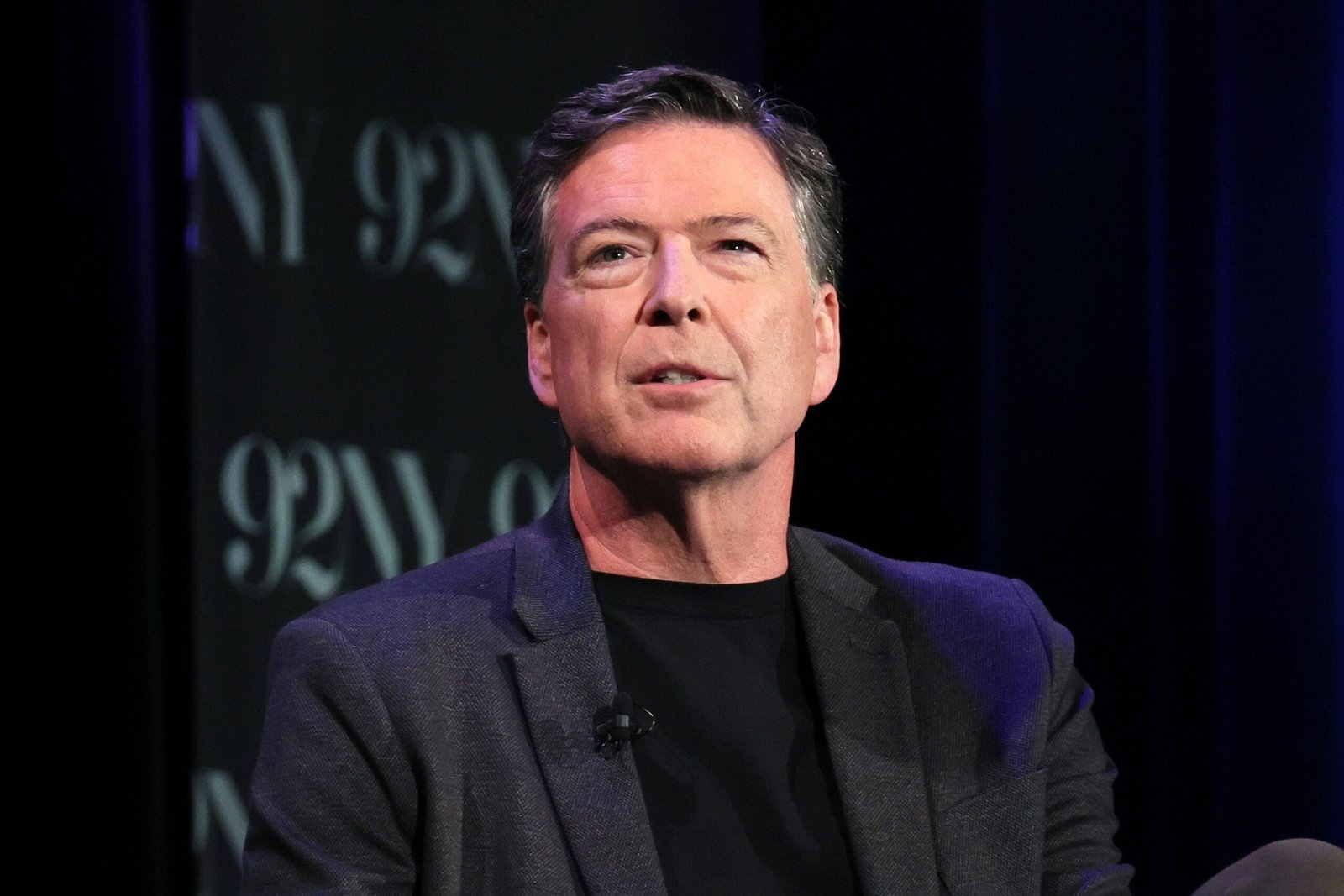
James Comey speaks on May 30, 2023 in New York City.
Dipasupil Day/Getty Images
“Ms. Halligan was not instructed to bring this charge; it was her decision and her decision alone,” Lemons said. “Mrs. Halligan was no puppet.”
In defending the president’s conduct, Lemons argued that it is “appropriate” for President Trump to publicly accuse his adversaries of breaking the law if he believes a crime was committed.
“What he’s said is that he broke the law,” Lemons said. “That has been the focus of the president’s statement and it is appropriate.”
Toward the end of the hearing, Judge Nachmanoff turned his attention to the legitimacy of the accusation itself.
Delving into the details of the charging document, the judge pressed Lemons to explain why two different indictments were issued, even going so far as to question why the color of the ink on the documents differed. Lemons struggled to answer their questions and often asked permission to consult with Halligan and his co-counsel.
It was at that point that Nachmanoff called Halligan directly to the lectern and questioned her about the series of events that led to the full grand jury not being presented and voting on a second indictment drafted by her office.
Halligan explained that the second indictment was presented and reviewed by the grand jury foreman, as well as another grand jury, and reflected the grand jury’s full vote on the previously rejected indictment.
At that point the courtroom fell completely silent and Judge Nachmanoff simply responded, “Well.”
Dreeben said the problem with the grand jury indictment clearly required Judge Nachmanoff to dismiss the case.
In his closing remarks, the judge ordered both sides to provide briefings on a 1969 case decided by the Supreme Court in which a defendant’s conviction was overturned due to a flawed grand jury presentation, and what consequences that decision might now have specifically in the Comey case.