Senate Majority Leader John Thune told reporters that the Senate could act as early as Tuesday to approve the release of Justice Department files on deceased sex offender Jeffrey Epstein.
Thune said an effort is currently underway to determine if any senators oppose moving forward with the bill. If no one objects, Thune said it was a “possibility” the bill could pass Tuesday, the same day it passed overwhelmingly in the House.
He also dismissed the idea of the Senate amending the bill despite House Speaker Mike Johnson urging the Senate to do so.
“I think when a bill comes out of the House 427-1 and the president says he was going to sign it, I’m not sure amending it is in the cards,” Thune said.

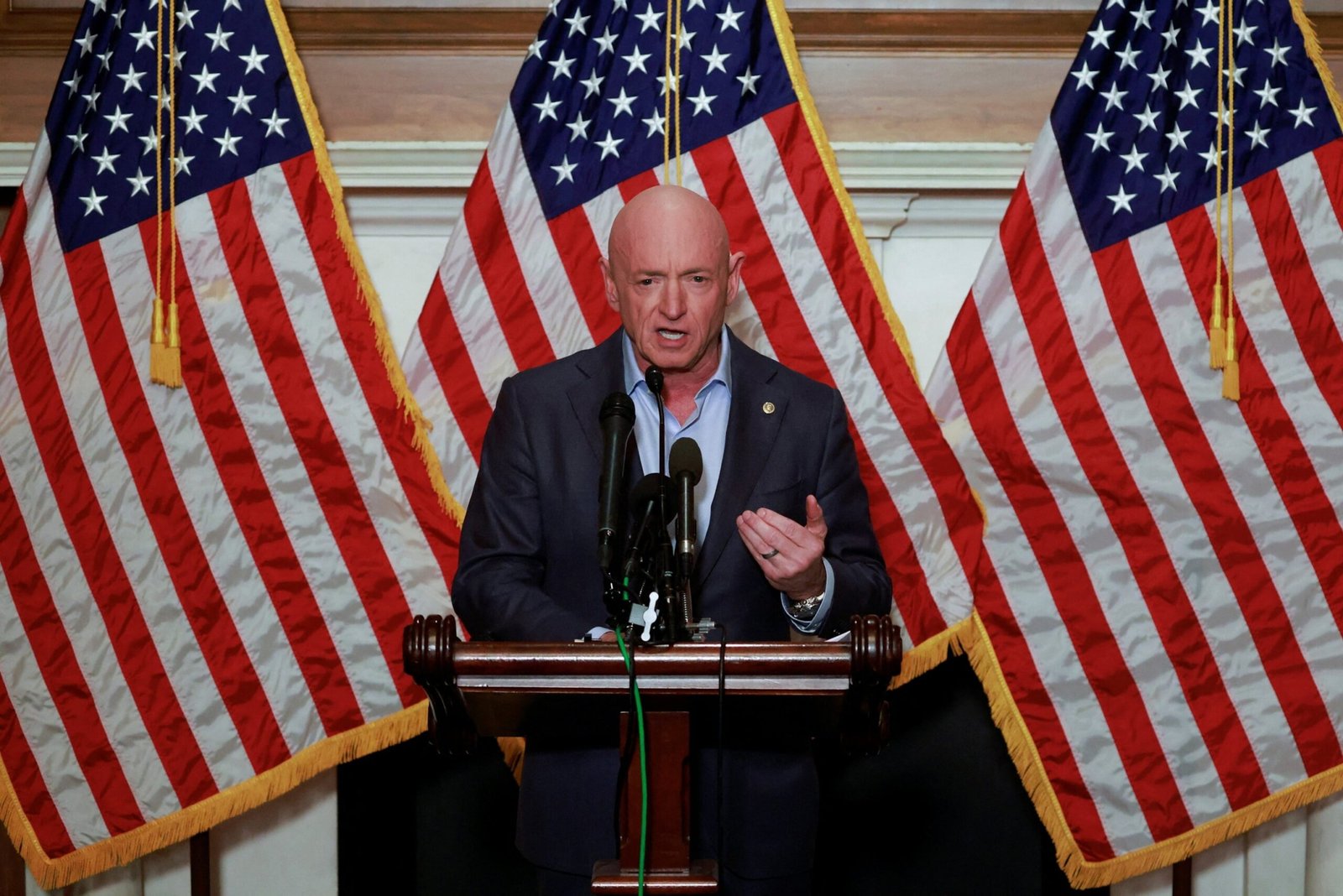
Senate Majority Leader John Thune speaks to reporters at the Capitol in Washington, Nov. 7, 2025.
J. Scott Applewhite/AP
Johnson is not enthusiastic about the prospect of the Senate rushing the Epstein files bill through the upper chamber without making changes.
“I just texted him: We’re getting together,” Johnson said of Thune. “We’ll talk about it.”
“There is an easy way to change the legislation to ensure that we do not cause permanent damage to the justice system, and I am going to insist on that,” Johnson added. “We will talk to our colleagues in the Senate.”
The measure passed in the House requires Attorney General Pam Bondi to make available all “unclassified records, documents, communications and investigative materials” in the possession of the Justice Department related to Epstein.
How would it work on the ground if this happened?
If the Senate moves forward on the Epstein bill Tuesday night, it is expected to be by unanimous consent.
Right now, Thune said the Senate is checking with members to see if there is anyone opposed to passing the bill Tuesday night.
If there are no objections, it could be a very quick process in the room. Thune or another senator would likely rise to ask that the bill be passed unanimously. The president would ask if there were any objections and, if there were none, the bill would be approved.
Of course, many procedural setbacks could arise. But there is a chance that this could move quickly across the ground.
If the bill passes the Senate, it will go to Trump’s desk to be signed into law. The president said Monday that he will sign the bill if it reaches his desk.
“I’m all for it,” Trump said.
If the legislation, as written in the House-passed bill, becomes law, it could force the disclosure of federal records of Epstein and his convicted accomplice Ghislaine Maxwell, as well as other people, including government officials, named or referenced in connection with Epstein’s “criminal activities, civil settlements, immunity, plea agreements or investigative proceedings,” according to the text of the legislation. Victims’ names and other identifying information would be excluded from disclosure, as would any items that may depict or contain child sexual abuse material, according to the text of the bill passed by the House.
Trump does not need to wait for Congress to act: he could order the release immediately.
Even if the measure passes the Senate and is ultimately signed into law by Trump, the Justice Department is unlikely to release the entire Epstein dossier, according to sources. Any materials related to ongoing investigations or claims of White House executive privilege will likely remain out of public view.
When would this happen?
The moment is very confusing.
The Senate floor is currently open and the Senate is expected to vote at 5:30 p.m. ET on a separate matter unrelated to the Epstein files.
Thune could also decide to postpone until later this week if that is the preference of its members.
ABC News’ John Parkinson and Rebecca Gelpi contributed to this report.